Short answer
Marathon fuelling has three phases. Load: 8–12 grams of carbohydrate per kilo of body weight per day for the 36–48 hours before the race, low in fibre and fat. Breakfast: 1–4 g/kg of familiar carbohydrate one to four hours before the start. On course: 30–60 grams of carbohydrate per hour for the first two hours and up to 90 g/hr using a glucose-plus-fructose mix if you have trained your gut for it. For a 70kg runner that is about 630g a day during the load, a 100–150g breakfast, and two to three gels an hour on course — practised in training first.
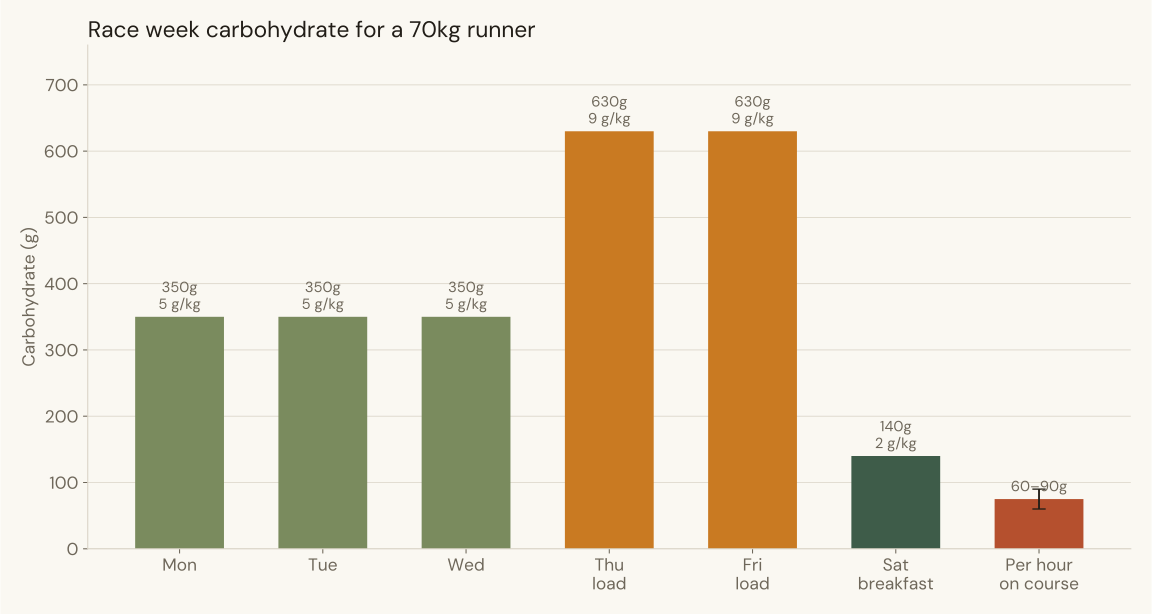
Marathon fuelling is not complicated, but it is arithmetic, and most runners do it by feel — which usually means underloading before the race and underfuelling during it. The numbers below come from the sports nutrition position stands and the carbohydrate-during-exercise literature; the worked example is for a 70kg runner and scales linearly to any weight.
Phase one: the load
Muscle glycogen is the fuel the marathon runs on, and a full store is roughly 400–500g in a trained runner — enough for about 30km at race effort, which is exactly why the race falls apart at 32km for people who did not load. The old six-day depletion-then-load protocol is gone. Bussau and colleagues showed that trained athletes reach maximal muscle glycogen in a single day at around 10 g/kg, provided training volume is low; the modern approach is one to two days at 8–12 g/kg while tapering.
For a 70kg runner, 9 g/kg is 630g of carbohydrate a day. That is a lot of food, and it is where people go wrong: they add pasta at dinner and call it loading, when the target is closer to double a normal training day. It has to be spread across the day, and it has to be low in fibre and fat so it actually gets in without gut trouble. The carb loading planner turns the gram target into six real meals; the carb loading guide explains the physiology and why the scale goes up 1–2kg while you do it.
| Phase | Target | 70kg runner | Notes |
|---|---|---|---|
| Normal training day | 5–7 g/kg | 350–490g | Baseline for a marathon build; see how many carbs runners need. |
| Load (36–48h before) | 8–12 g/kg/day | 560–840g | Low fibre, low fat, spread over 5–6 meals. Training volume low. |
| Breakfast (1–4h before) | 1–4 g/kg | 70–280g | Familiar foods only. Closer to 1 g/kg if eating an hour out, more if three hours out. |
| On course, first 2h | 30–60 g/hr | 1–2 gels/hr | Start in the first 30 minutes, not when you feel flat. |
| On course, beyond 2.5h | Up to 90 g/hr | 3 gels/hr or gels + drink | Glucose:fructose mix; only if trained for it. |
Phase two: race morning
The load fills the muscles; breakfast refills the liver, which empties overnight and is what keeps blood glucose steady for the brain in the second half. The position stand from the Academy of Nutrition and Dietetics, Dietitians of Canada and the ACSM puts pre-event intake at 1–4 g/kg in the one to four hours before. The timing sets the amount: three hours out, a 70kg runner can comfortably take 2 g/kg — 140g, which is porridge with honey and a banana and a glass of juice. An hour out, 1 g/kg of something simple is the ceiling for most stomachs.
The only rule that matters more than the number is familiar. Race morning is not the time for a new bread, a new bar or a hotel buffet experiment. Eat what you ate before your long runs.
The runner who hits the wall at 32km did not run out of fitness. They ran out of glycogen, and they ran out of it on Thursday.
Phase three: on course
Jeukendrup’s synthesis of the carbohydrate-during-exercise research gives the range: for efforts of two to three hours, 30–60 g/hr improves performance; beyond about two and a half hours, intakes up to 90 g/hr help further — but only if the carbohydrate comes as a mix of glucose and fructose, because the gut absorbs the two through different transporters and a single sugar saturates at around 60 g/hr. Most modern gels and drinks are already formulated as a 2:1 or 1:0.8 glucose-to-fructose blend for this reason.
The gel arithmetic for a 70kg runner targeting a four-hour marathon:
Know your gel
Standard gels carry 22–25g of carbohydrate; the larger ones 30–40g. Read the packet, because “one gel an hour” means 22g from one brand and 40g from another.
Hours one and two: 60 g/hr
Two to three standard gels per hour, or two gels plus a cup of sports drink at the aid station. Take the first one at 20–30 minutes, not at the first sign of fading.
Hours three and four: 60–90 g/hr
Hold the rate, and go higher only if you trained the gut for it. Appetite disappears late in a marathon; the schedule is what keeps you eating.
Total for the race
Around 250–300g on course for a four-hour runner: ten to twelve standard gels, or seven or eight plus drink. Carry most of it; do not rely on the course having the brand you trained with.
Water with gels, not sports drink, unless you have done the sums on total carbohydrate concentration — too much sugar in the gut at once slows emptying and is the usual cause of race-day nausea.
Train the gut first
Sixty to ninety grams an hour is not something you do for the first time on race day. Costa and colleagues showed that two weeks of repeatedly taking carbohydrate during training reduced gut symptoms and improved absorption — the gut adapts like any other tissue. Use the last four to six long runs to practise the exact gels, the exact rate and the exact timing, including the late ones when you least want them. How to fuel a long run covers the practice sessions.
What about fluid and caffeine?
Fluid is a separate calculation: drink to thirst, aim not to lose much more than 2% of body mass, and know your sweat rate before a hot race — the fluid loss guide covers it. Sodium matters in the second half of a hot marathon and much less in a cool one; the electrolytes piece has the numbers. Caffeine at 3–6 mg/kg an hour before the start is one of the best-supported ergogenic aids in the literature, but it is also a bowel stimulant, so it too belongs in the long-run rehearsal, not the race-morning debut.
Get the three phases right and the last 10km becomes a question of what you trained for. Get them wrong and it becomes a question of what you ate on Thursday.
Kovr moves your fuel targets with race week — automatically.
Tell Kovr the race and it lifts your carbohydrate target through the loading days, shows the day’s number on the Today view, and logs what you actually ate against it. On race morning the plan is already there. Afterwards the debrief tells you whether the load, the breakfast or the gels were the difference.
Download Kovr on the App StoreFree with a 14-day trial · Garmin, Apple Watch & Oura
Sources cited
- Bussau, V.A., Fairchild, T.J., Rao, A., Steele, P. & Fournier, P.A. (2002). Carbohydrate loading in human muscle: an improved 1 day protocol. European Journal of Applied Physiology — maximal muscle glycogen reached in one day at ~10 g/kg with low training volume
- Jeukendrup, A. (2014). A step towards personalized sports nutrition: carbohydrate intake during exercise. Sports Medicine — the 30–60 g/hr and up-to-90 g/hr ranges and the glucose:fructose rationale
- Thomas, D.T., Erdman, K.A. & Burke, L.M. (2016). Position of the Academy of Nutrition and Dietetics, Dietitians of Canada, and the American College of Sports Medicine: Nutrition and Athletic Performance. Journal of the Academy of Nutrition and Dietetics — pre-event intake of 1–4 g/kg in the 1–4 hours before, and daily targets by training load
- Costa, R.J.S. et al. (2017). Gut-training: the impact of two weeks repetitive gut-challenge during exercise on gastrointestinal status, glucose availability, fuel kinetics, and running performance. Applied Physiology, Nutrition, and Metabolism — two weeks of repeated carbohydrate intake during training improved gut tolerance and absorption
Frequently asked questions
How many gels do I need for a marathon?
Target 60 g/hr of carbohydrate for the first two hours and 60–90 g/hr after that. With standard 22–25g gels that is two to three per hour — roughly ten to twelve for a four-hour marathon, or seven or eight if you also take sports drink at aid stations. Read the packet: gels range from 22g to 40g.
How much should I carb load before a marathon?
8–12 grams of carbohydrate per kilo of body weight per day for the 36–48 hours before the race, with training volume low. For a 70kg runner that is 560–840g a day — roughly double a normal training day — spread across five or six low-fibre, low-fat meals.
What should I eat the morning of a marathon?
1–4 g/kg of familiar carbohydrate one to four hours before the start. Three hours out, a 70kg runner can take about 140g: porridge with honey, a banana and juice. An hour out, keep it near 1 g/kg of something simple. Nothing new on race morning.
When should I take my first gel?
In the first 20–30 minutes, then on a schedule. Waiting until you feel flat means the glycogen is already low; absorption takes time, and appetite disappears late in the race. The schedule keeps you eating when you least want to.
Should I take gels with water or sports drink?
Water, unless you have calculated the total carbohydrate concentration. A gel plus sports drink can push the gut past what it can empty, which slows absorption and is the usual cause of race-day nausea. If you use both, take the gel with water and the drink on its own at a different aid station.
Can you train your stomach to handle more carbohydrate?
Yes. Two weeks of repeatedly taking carbohydrate during training reduced gut symptoms and improved absorption in a controlled study. Use your last four to six long runs to rehearse the exact gels, rate and timing you will use on race day.