Short answer
For a half marathon, 8–10g of carbohydrate per kg of body weight across a single day is enough — roughly 560–700g for a 70kg runner. The multi-day depletion-then-load protocols were designed for marathon distance and usually leave half-marathoners feeling heavy. If your race is under about 90 minutes, a normal high-carb day is sufficient.
There are two ways to get carb loading wrong before a half marathon, and most runners pick one of them. The first is doing too much — three days of pasta, a stomach that feels like a kettlebell on the start line, and a kilo or two on the scale that sends you into a quiet panic. The second is doing nothing, or near enough — a normal Saturday, a small dinner, and a wall somewhere after 15km that no amount of grit can run through.
Want the grams turned into actual plates? Try the free carb loading planner.
The evidence says most runners land closer to the second. An international study of endurance athletes found that on the day before competition, carbohydrate intakes of just 2.5–7.3g per kilogram were the norm — well under the 8–12g/kg the guidelines call for. People think they’re loading. The plate says otherwise. The half marathon is the distance this goes wrong most often, because runners either borrow the full marathon protocol (too much) or assume the race is too short to bother (too little). The truth sits in between, and it’s simpler than either.
The half-marathon load, in numbers
Target: 8–10g of carbohydrate per kg of body weight — for one day, not three.
A 70kg runner: roughly 560–700g of carbs across the day before.
Window: 24–36 hours. No depletion phase, no week-long ritual.
The scale: expect +1–2kg of water weight. It’s fuel, and it’s gone by the finish.
Does a half marathon even need carb loading?
Start with the question almost no carb-loading article asks: do you even need to?
Your muscles and liver hold roughly 500g of carbohydrate — enough for about 75 to 90 minutes of moderate-to-hard running before the tank runs low and your body is forced to lean on fat, which burns too slowly to hold race pace. That moment is the wall. Carb loading doesn’t add a new fuel system; it tops the existing one closer to its ceiling so the wall arrives later, or never. That 90-minute figure is the entire decision.
| Distance | Typical time | Load? |
|---|---|---|
| parkrun / 5k / 10k | Under ~50 min | No — tank’s already full. |
| Fast half (sub-90) | 75–90 min | Marginal. Normal eating usually covers it. |
| Most halves | 1:45–2:30 | Yes — a light, one-day top-up. |
| Marathon | 3 hr+ | Yes — the fuller protocol (10–12g/kg). |
A frequently cited treadmill study (Sherman and colleagues, 1981) found that loading muscle glycogen higher did not improve half-marathon performance for runners finishing inside about 90 minutes — they simply had fuel left over at the line. If you’re running 1:20, loading is mostly insurance. If you’re running 2:10, you’ll genuinely dip into your reserves, and a modest top-up earns its place. For a 5k or 10k, skip it — you’ll finish with glycogen to spare and only carry the bloat.
Carb loading isn’t a ritual you owe the race. It’s a fix for one specific problem — running longer than your tank lasts. If your race is shorter than your tank, there’s nothing to fix.
How much: your number
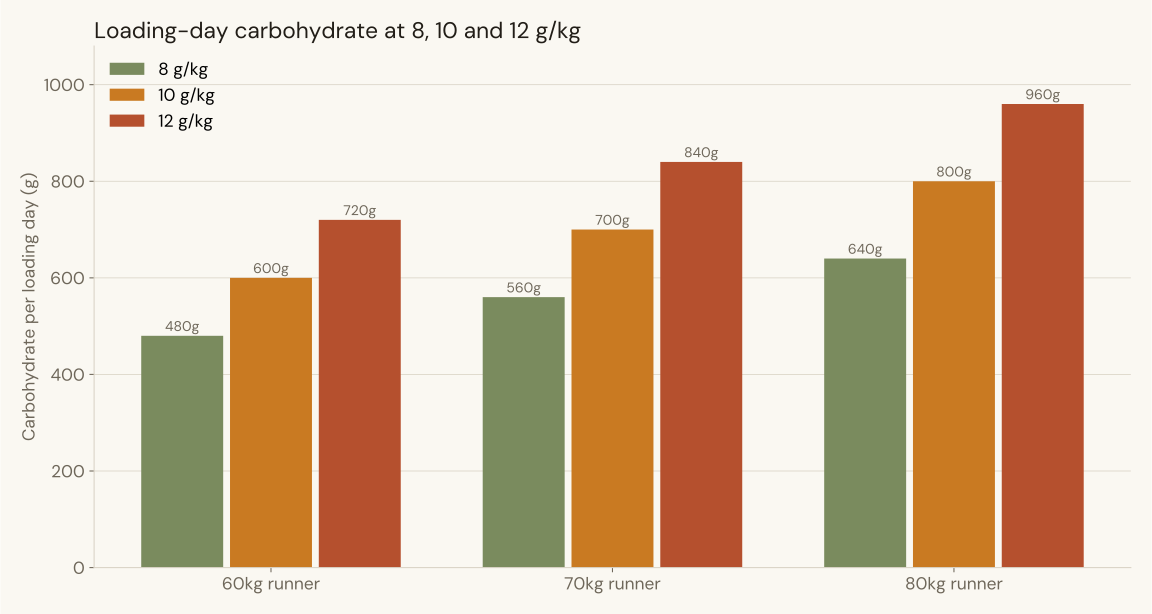
For a half marathon, the target is 8–10g of carbohydrate per kilogram of body weight, for a single day. That’s the recreational sweet spot — deliberately lighter than the 10–12g/kg the ACSM recommends for a marathon, because there’s no sense filling stores you won’t empty. Run the maths once and you never have to guess again.
| Body weight | 8g/kg | 10g/kg |
|---|---|---|
| 55 kg | 440g | 550g |
| 60 kg | 480g | 600g |
| 70 kg | 560g | 700g |
| 80 kg | 640g | 800g |
| 90 kg | 720g | 900g |
Those numbers look enormous next to a normal day, and that’s the part most people miss: loading is a whole day of carb-focused eating, not one big dinner. A single pasta meal is maybe 150–200g of carbohydrate. A 70kg runner needs three to four times that across the day. You reach it by making carbohydrate the centre of every meal and snack — not by eating more of everything, but by shifting the plate so carbs make up around 70% of what you eat. For the staples that do this cheaply, our breakdown of the best value carbs for runners is a useful shopping list.
When: one day is enough
The old image of carb loading — a week out, a brutal depletion phase of low-carb training to ‘empty the tank’ first, then days of stuffing — is dead. Modern research showed you can reach the same supercompensated glycogen levels from roughly 24 to 36 hours of high-carb eating, with no depletion phase and far less misery. Trained runners respond even faster.
For a half, that means the day before is the day that matters. It lands naturally inside your taper, when training volume has dropped and you’re no longer burning through what you store. Load while you’re still running hard and you’re just topping up a leaking tank; leave it to race morning and you’re too late — a single breakfast can’t replace a day’s worth of glycogen. Done properly, muscle that sits around 150 mmol/kg when well-fed climbs toward 200 — a 30–40% jump in stored fuel. That extra is what carries you through the back third of the race.
What to put on the plate
Two rules: make it fast, and make it boring.
Fast means low-fibre, easily digested carbohydrate — white rice, white pasta, white bread, potatoes with the skin off, ripe bananas, fruit juice, oats, honey, sports drink. The wholegrain virtue you practise the other fifty-one weeks of the year works against you here: fibre fills you up and stirs the gut at exactly the wrong time. Save the brown rice and lentils for the week after.
Boring means nothing new. Race week is not the time for the restaurant you’ve been meaning to try or the gel flavour you saw online. Use foods you’ve eaten before easy runs and know your stomach tolerates. Go lighter on fat and heavy protein at the final dinner, too — both slow digestion and crowd out room for carbs.
Keep protein steady, drink to match
Loading is a shift in ratio, not a free-for-all. You’re moving the plate toward carbohydrate, not piling carbs on top of everything else — keep protein at its normal level (it protects the muscle you’ve trained) and let it ride while carbs take centre stage. Total calories rise a little; they don’t double. This is exactly how a good system handles it: carbs up, protein held, spread across the day rather than dumped into one meal.
Then drink. Every gram of glycogen your body stores is held with about 3 grams of water, which does two things. It’s why the scale jumps 1–2kg overnight — that’s stored fuel and its water, not fat, and it’s gone by the finish line. And it’s why under-drinking quietly caps your load: no water, no storage. Sip through the day and lean on a little extra sodium (sports drink, a salted meal) to help you hold the fluid.
The mistakes that backfire
Most bad race mornings trace back to one of these.
1. Borrowing the marathon protocol
Three days at 10–12g/kg for a half leaves you heavy, bloated, and carrying glycogen you’ll never burn. One day at 8–10g/kg is the dose. More isn’t better — it’s just heavier.
2. The one giant dinner
A heroic bowl of pasta the night before feels like loading and isn’t. It’s a fraction of the day’s target, eaten too late, sitting in your stomach overnight. Spread the carbs from breakfast onward instead.
3. “Healthy” high-fibre food
Wholegrain pasta, brown rice, big salads, legumes — good habits, wrong week. Fibre is the most common cause of a nervous, churning gut on the start line. Go white and simple for the last 24–36 hours.
4. Forgetting the water
Carbs without fluid don’t store well. Load but skip the drinking and you’ve done half the job — you’ll feel flat despite the effort.
5. Panicking at the scale
You will weigh more on race morning. That’s the load working, not a problem. Runners who see the number and try to ‘undo’ it with a fasted morning just arrive at the start underfuelled.
The protocol, start to finish
1. Decide if you actually need it
Is your race longer than about 90 minutes? If yes, load. If it is a parkrun, 5k, 10k, or a sub-90-minute half, eat normally — your tank is already full and loading only adds bloat.
2. Get your number
Bodyweight in kilograms × 8 to 10. That is your carbohydrate target, in grams, for the day before the race. A 70kg runner: 560–700g. Run the maths once and you never guess again.
3. Spread it across the final day
Make carbohydrate the centre of every meal and snack from breakfast onward — around 70% of the plate, not one giant dinner. Go low-fibre: white rice, pasta, potatoes, bread, juice, banana. Nothing new.
4. Hydrate and hold protein steady
Every gram of stored glycogen holds about 3g of water, so drink through the day with a little extra sodium to lock the fuel in. Keep protein at its normal level, and ignore the scale on race morning — that weight is fuel.
Loading isn’t fuelling
One last distinction, because the two get confused. Carb loading fills the tank before the gun. Race fuelling — gels, drink, chews during the run — replaces what you burn after it. For a half much over 90 minutes you want both: arrive full, then top up with 30–60g of carbohydrate per hour once you’re past the first half. Loading buys you the start; fuelling buys you the finish. We cover the in-race side in how to fuel a long run, and the everyday baseline that makes loading effortless in how many carbs runners need per day.
Load for the race you’re actually running, not the one on the magazine cover. For most half marathons that’s a single, simple day — enough to move the wall past the finish line, and no more.
Kovr runs the loading maths for you — and only when the race actually calls for it.
Tell Kovr a race is coming and how long it’ll take. For anything over 90 minutes, it builds the loading day from your body weight — carbs up toward 8–10g per kilo, protein held steady, spread across the day instead of one heavy dinner. Under 90 minutes, it tells you to skip the load and save the bloat. The number moves with you; you just eat.
Download Kovr on the App StoreFree with a 14-day trial · Garmin, Apple Watch & Oura
Frequently asked questions
Do I need to carb load for a half marathon?
It depends on your finish time. Your muscles and liver hold roughly 500g of carbohydrate — about 75 to 90 minutes of hard running. If you will finish well under 90 minutes, normal eating already fills the tank and loading adds little but water weight. If you are running 1:45 to 2:30, you will dip into your reserves, and a light one-day top-up earns its place. For a 5k or 10k, skip it entirely.
How many carbs should I eat to carb load for a half marathon?
Aim for 8–10g of carbohydrate per kilogram of body weight, for a single day — lighter than the 10–12g/kg used for a marathon. A 70kg runner targets 560–700g across the day before the race. That is a whole day of carb-focused eating, not one big dinner, so make carbohydrate roughly 70% of every meal and snack.
How many days before a half marathon should I carb load?
One day is enough. Modern research shows you reach the same supercompensated glycogen levels from 24 to 36 hours of high-carb eating, with no depletion phase and far less discomfort — trained runners respond even faster. The day before is the day that matters; it lands inside your taper when you are no longer burning through what you store. A single race-morning breakfast is too late to replenish a full day of glycogen.
Will carb loading make me gain weight?
Yes, and that is normal. Every gram of glycogen your body stores is held with about 3 grams of water, so the scale typically jumps 1–2kg overnight. That is stored fuel and its water, not fat, and it is gone by the finish line. Do not try to undo it with a fasted race morning — you will only arrive underfuelled.
What should I eat to carb load for a half marathon?
Fast and familiar carbohydrate. Low-fibre, easily digested foods — white rice, white pasta, white bread, potatoes with the skin off, ripe bananas, fruit juice, oats, honey, sports drink. Cut back on high-fibre foods such as wholegrains, legumes, and large salads in the final 24–36 hours, since fibre is the most common cause of a churning gut on the start line. Keep fat and heavy protein lighter at the last dinner, and do not try anything new.
Should I carb load for a 10k or parkrun?
No. A 10k, 5k, or parkrun is comfortably shorter than the 75–90 minutes your stored glycogen already covers, so there is nothing to top up. Loading for these distances just leaves you carrying extra water weight and a fuller stomach with no performance benefit. Eat a normal, familiar meal beforehand and save the load for races over 90 minutes.
Do I still need to fuel during the half marathon if I carb loaded?
If you are racing longer than about 90 minutes, yes — they are two different jobs. Carb loading fills the tank before the start; in-race fuelling replaces what you burn during the run. Arrive loaded, then take on 30–60g of carbohydrate per hour once you are past the first half. Loading buys you the start; fuelling buys you the finish.
Sources cited
- Thomas, D.T., Erdman, K.A. & Burke, L.M. (2016). Position of the Academy of Nutrition and Dietetics, Dietitians of Canada, and the American College of Sports Medicine: Nutrition and Athletic Performance. Journal of the Academy of Nutrition and Dietetics, 116(3), 501–528.
- Bussau, V.A., Fairchild, T.J., Rao, A., Steele, P. & Fournier, P.A. (2002). Carbohydrate loading in human muscle: an improved 1 day protocol. European Journal of Applied Physiology, 87, 290–295.
- Areta, J.L. & Hopkins, W.G. Skeletal muscle glycogen content and endurance performance — Sherman et al. (1981) summarised in the Gatorade Sports Science Institute review. View review
- Mind the gap: limited knowledge of carbohydrate guidelines for competition in an international cohort of endurance athletes (2023). View study