Short answer
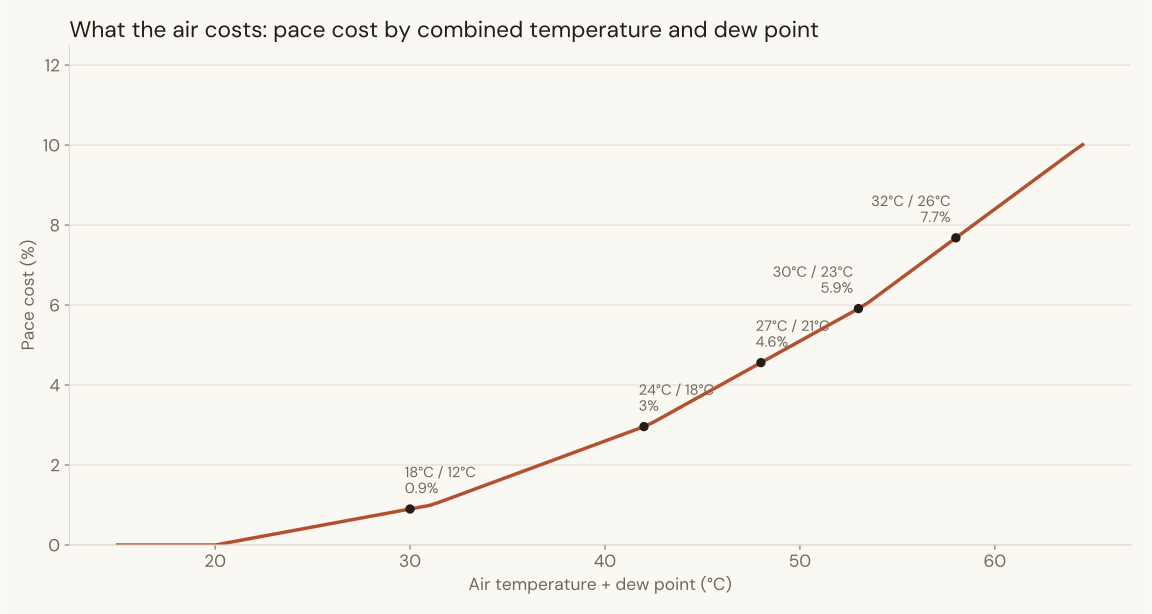
Dew point is the temperature at which the air is saturated — a direct measure of how much water is already in it, and therefore how well your sweat can evaporate. Below about 13°C it is comfortable; 16–18°C is noticeably harder; above 21°C evaporative cooling is severely limited; above 24°C hard efforts become risky. Relative humidity cannot tell you this, because it is a percentage of a capacity that moves with temperature. Adding air temperature and dew point together gives a usable pace-cost estimate: no meaningful cost below a combined 38°C, roughly 3% around 24°C with an 18°C dew point, and 8–10% or more in oppressive air.
Most runners check the temperature. Some check the humidity. Almost nobody checks the number that actually decides how the run will feel, which is the dew point — and that is why the same 24°C morning can be pleasant one week and brutal the next, with no change on the thermometer.
What dew point actually measures
Dew point is the temperature the air would have to cool to before it was saturated. It is an absolute measure of water in the air: a 20°C dew point means the same amount of moisture whether the air temperature is 22°C or 32°C. That is what makes it useful. Sweat cools you only when it evaporates, and evaporation depends on the gap between the moisture on your skin and the moisture already in the air. Dew point is that gap, read directly.
Relative humidity is a proportion of a capacity that moves with temperature, which is why it is so misleading. Ninety percent humidity at 10°C is a lovely winter morning with a 8°C dew point. Sixty percent at 30°C is a 21°C dew point and a genuinely hard hour. The percentage went down; the run got much worse.
Temperature tells you how hot the air is. Dew point tells you whether your cooling system works.
The dew point chart
These bands are the ones used across running coaching and exercise physiology. They describe what the air does to evaporative cooling, before you add the temperature on top.
| Dew point | How it feels | What it does |
|---|---|---|
| Below 10°C | Dry, comfortable | Sweat evaporates almost as fast as it forms. The clock tells the truth. |
| 10–13°C | Pleasant | Cooling still efficient. Most personal bests happen here or below. |
| 13–16°C | Noticeable | Sweat starts to linger. Easy runs still easy; hard sessions cost a little more. |
| 16–18°C | Sticky | Cooling degrades. Expect a few seconds per kilometre and a higher heart rate at the same pace. |
| 18–21°C | Hard | Sweat drips more than it evaporates. Cardiac drift arrives early. Run by effort, not pace. |
| 21–24°C | Oppressive | Evaporative cooling severely limited. Hard efforts should be shortened or moved. |
| Above 24°C | Dangerous for hard work | Core temperature climbs regardless of pace. Easy only, and short. |
Notice what the chart does not contain: the air temperature. That is deliberate. A 26°C day with a 12°C dew point — a dry inland morning — sits in the “pleasant” row and runs like one. A 22°C day with a 20°C dew point, the kind the Queensland coast produces from November to March, sits in “hard” and runs like that.
Putting a number on the cost
To turn the chart into a pace adjustment you add the temperature back in. The temperature-plus-dew-point method, used widely in coaching, sums the two in degrees and reads the cost off a curve. In round figures:
| Temp / dew point | Combined | Pace cost | At 5:30/km |
|---|---|---|---|
| 13°C / 7°C | 20°C | 0% | 5:30 |
| 18°C / 12°C | 30°C | ~1% | 5:33 |
| 21°C / 16°C | 37°C | ~2% | 5:37 |
| 24°C / 18°C | 42°C | ~3% | 5:40 |
| 27°C / 21°C | 48°C | ~4.5% | 5:45 |
| 30°C / 23°C | 53°C | ~6% | 5:50 |
| 32°C / 26°C | 58°C+ | 8–10%+ | 5:56–6:03 |
Three percent does not sound like much until you multiply it out. On a half marathon it is three and a half minutes. On a marathon it is seven. A runner who trained through a cool autumn and races on a sticky spring morning has not lost fitness — they have been handed a different course. The heat-adjusted pace calculator does the arithmetic for your own pace and distance.
The marathon literature agrees on the shape. Ely and colleagues analysed seven marathons across the WBGT range and found performance declined progressively with the heat index, and that slower runners were hit hardest — partly because they are out there longer, partly because they run in the pack, where airflow is worse. El Helou’s analysis of 1.8 million marathon finishes found the same: temperature was the dominant weather variable, and the best times clustered in cool air.
One number, three symptoms
Dew point is worth understanding because it explains three things runners usually blame on themselves.
The slow run
Same route, same effort, thirty seconds a kilometre slower. Nothing about your fitness changed in a week; the air did. Lost fitness, or just the weather? works through how to tell.
The climbing heart rate
When sweat cannot evaporate, blood is diverted to the skin to dump heat by other means, and the heart pumps faster to keep the muscles supplied. That is cardiac drift, and dew point is its main driver.
The falling VO2 max
Your watch estimates VO2 max from pace against heart rate. Heat pushes heart rate up at any pace, so the estimate falls — a measurement artefact, not a physiological loss. Why Garmin VO2 max drops in heat explains what to ignore.
How to run by dew point
Find the number. Most weather apps show dew point under the details view; the Bureau of Meteorology observations list it directly. Check it at the time you will run, not the daily figure — dew point is often highest at dawn on the coast.
Above 16°C, run by effort. Set the watch to heart rate or leave it on the wrist and go by breathing. Holding cool-weather paces in heavy air converts easy runs into hard ones and hard sessions into damage.
Move the hard work. Intervals and tempo belong in the lowest dew point of the week, which is sometimes 4am and sometimes Tuesday. Easy volume tolerates bad air far better than quality does.
Give acclimatisation two weeks. Ten to fourteen days of consistent training in the heat expands plasma volume, starts sweating earlier and makes the same air feel easier. It shrinks the cost; it never removes it. Racinais and colleagues’ consensus guidance puts the useful window at one to two weeks, with most of the benefit in the first.
Drink to thirst, and know your sweat rate. Heavy air raises sweat rate because the body keeps producing sweat that fails to cool. Your hot-day rate can be double your cool-day rate — the fluid loss guide and sweat rate calculator put a figure on it.
Adjust the race goal before the gun. A time set in cool conditions is a ceiling on a warm morning, not a plan. How to pace a race in the heat covers the adjustment and the tactics.
Kovr stamps every run with the dew point it happened in.
Every session syncs from Apple Health with the real temperature and dew point at the time you ran. A slow run in heavy air reads as the air, not as a fitness loss; your race predictions are priced for the conditions you will actually get; and the weekly letter names the pattern when your hardest days keep landing on the stickiest mornings.
Download Kovr on the App StoreFree with a 14-day trial · Garmin, Apple Watch & Oura
Sources cited
- Ely, M.R., Cheuvront, S.N., Roberts, W.O. & Montain, S.J. (2007). Impact of weather on marathon-running performance. Medicine & Science in Sports & Exercise — seven marathons across the WBGT range; performance fell progressively with heat and slower runners were affected most
- El Helou, N. et al. (2012). Impact of environmental parameters on marathon running performance. PLoS ONE — 1.8 million finishes across six major marathons; temperature the dominant weather variable
- Racinais, S. et al. (2015). Consensus recommendations on training and competing in the heat. British Journal of Sports Medicine — the one-to-two-week acclimatisation window and competition guidance
- Périard, J.D., Racinais, S. & Sawka, M.N. (2015). Adaptations and mechanisms of human heat acclimation: applications for competitive athletes and sports. Scandinavian Journal of Medicine & Science in Sports — plasma volume expansion, earlier sweating and the limits of acclimatisation
Frequently asked questions
What is a good dew point for running?
Below 13°C is comfortable and where most personal bests are set. 13–16°C is noticeable but fine; 16–18°C is sticky; 18–21°C is hard and calls for effort-based pacing; above 21°C evaporative cooling is severely limited and above 24°C hard efforts become risky.
Why does dew point matter more than humidity for running?
Relative humidity is a percentage of a capacity that changes with temperature, so 90% at 10°C is pleasant while 60% at 30°C is brutal. Dew point measures the absolute moisture in the air, which is what decides whether sweat can evaporate and cool you.
How much does dew point slow your pace?
Using the temperature-plus-dew-point method: no meaningful cost below a combined 38°C; about 1% at 18°C with a 12°C dew point; about 3% at 24°C with an 18°C dew point; 6% around 30°C with a 23°C dew point; 8–10% or more in oppressive air. A 3% cost is about seven minutes across a marathon.
Where do I find the dew point?
Most weather apps list it under the detailed view for the current hour; national weather services publish it in their observations. Check the reading for the time you will run rather than the daily figure — on the coast it is often highest at dawn.
Does heat acclimatisation make the dew point cost go away?
It shrinks it, never removes it. Ten to fourteen days of consistent training in heat expands plasma volume and brings sweating on earlier, so the same air feels easier and costs less. Even fully acclimatised elite runners slow in hot championships.
Should I run by pace or effort when the dew point is high?
Effort. Above about 16°C dew point, heat pushes heart rate and perceived effort up at any pace, so holding cool-weather paces turns easy runs into hard ones. Let pace float and keep effort honest; move hard sessions to the lowest dew point of the week.