Short answer
Cardiac drift is the gradual rise in heart rate across a sustained run at constant pace. Sweating reduces blood plasma volume, so each beat moves less blood and the heart compensates by beating faster. It is normal physiology, worst in heat and humidity, and not a sign of lost fitness. On a cool steady run, under about 5% drift between the first and second half indicates a solid aerobic base.
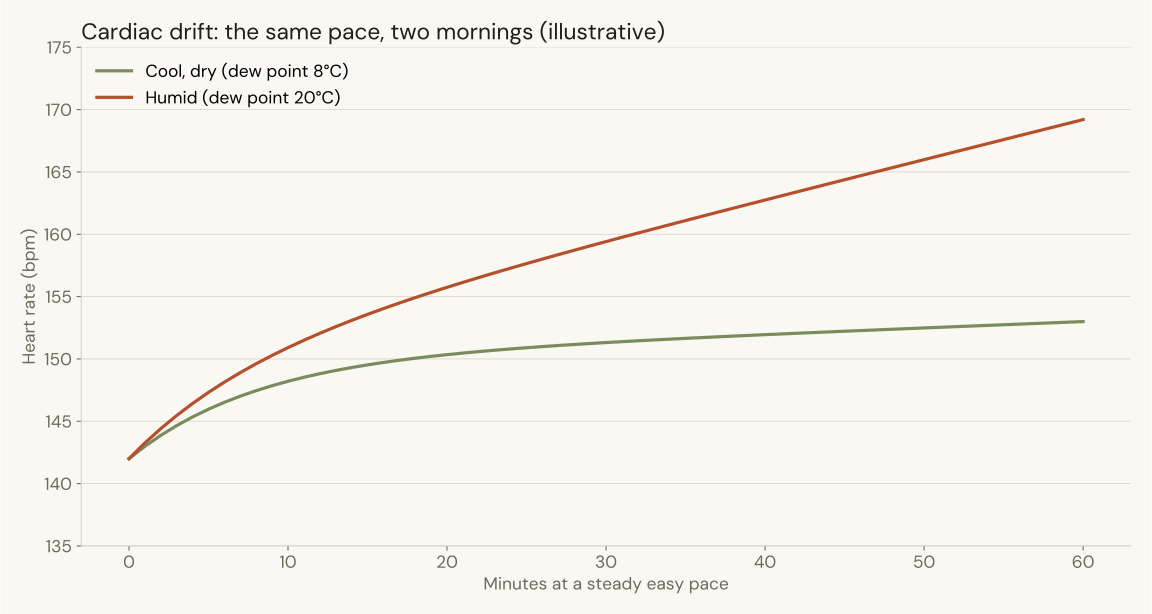
Here’s a moment every runner who wears a heart rate monitor eventually has. You set out on an easy run, nice and controlled, sitting comfortably at 135 beats per minute. The pace feels gentle. Nothing changes — same road, same breathing, same effort. And yet, half an hour in, you glance at your watch and it reads 150. Then 155. You haven’t sped up. You don’t feel worse. But the number says you’ve drifted from an easy zone into what’s supposed to be a hard one.
The instinct is to panic slightly: am I unfit? Is something wrong? Was this run secretly harder than it felt? The answer, almost always, is no. What you’re seeing has a name — cardiac drift — and once you understand it, it stops being alarming and starts being useful.
What cardiac drift actually is
Cardiac drift is the gradual rise in heart rate over the course of a sustained run, even when your pace and effort stay constant. It’s not a glitch in your watch and it’s not you quietly falling apart. It’s your cardiovascular system doing exactly what it’s supposed to do under a growing load.
The main driver is fluid. As you run, you sweat — and as you lose fluid, the volume of plasma in your blood drops. Thinner blood volume means each heartbeat moves slightly less blood, so to keep delivering the same oxygen to your working muscles, your heart compensates the only way it can: it beats faster. At the same time, more and more blood is being routed to your skin to shed heat. The result is a heart rate that climbs steadily while your legs are doing exactly the same work they were doing at the start.
“Your pace didn’t change. Your effort didn’t change. Your heart rate climbed because your body is cooling itself and working with less fluid — not because your fitness left mid-run.”
Why it’s so much worse in the heat
If drift feels dramatic in summer and barely noticeable in winter, that’s not your imagination. Heat and humidity are the accelerant. The hotter and more humid it is, the more blood your body diverts to your skin for cooling, and the more you sweat — so plasma volume falls faster and the compensating rise in heart rate is steeper. On a hot, humid long run, your heart rate at the same effort can climb 10 to 15 beats per minute from the environment alone.
This is the same physics behind why a summer tempo feels brutal at a pace that was comfortable in spring. The engine hasn’t weakened. The air just made the same work cost more — and your heart rate is the honest receipt for that cost. In cool, dry conditions, drift over a normal easy run is modest. Push the dew point up and it becomes the dominant feature of your data — you can see the size of the effect in our heat-adjusted pace calculator.
This is the same question from a different angle as whether a slow run means lost fitness or just weather. And if the run felt wrong for reasons that were not heat, the shortlist of causes is short: HRV, glycogen, heat or load.
When drift is normal, and when it’s a flag
Some drift is expected on almost any run longer than 45 minutes or so, and it’s nothing to act on. But the amount of drift, read properly, tells you something real. Here’s how to interpret it.
| What you saw | Most likely cause | Verdict |
|---|---|---|
| Gradual rise on a long or warm run | Normal cardiac drift — heat & fluid loss | Expected, ignore it |
| Large drift on a hot, humid day | Heat load, not fitness | Normal — pace by effort |
| Big drift on a cool day at easy pace | Pace was too hard, or aerobic base still building | Worth attention |
| Heart rate spikes then keeps climbing steeply | Dehydration or under-fuelling | Drink, fuel, ease off |
The distinction that matters: drift caused by heat and duration is normal and tells you nothing bad about your fitness. Drift on a cool, well-fuelled, genuinely easy run is the version worth noticing — it usually means the “easy” pace wasn’t actually easy, or the aerobic base needs more time.
The useful part: drift as a fitness test
Here’s where drift stops being a nuisance and becomes a tool. Because a fitter aerobic system holds its heart rate steadier for longer, the size of your drift on a controlled run is a rough measure of aerobic durability. Coaches call it decoupling — the point where heart rate and pace stop moving together.
The simple field version: on a steady, aerobic-effort run of an hour or more in cool conditions, compare your average heart rate in the first half to the second half. If it rises by less than about 5 percent, your aerobic base is in good shape — you’re holding the effort without your body scrambling to keep up. A larger gap suggests either you started too quickly, or your aerobic engine still has room to build. Repeat the same run every few weeks and a shrinking drift is direct, honest evidence that your base is getting stronger — often before your pace shows it.
The 5% self-test
On a cool day, run 60–90 minutes at a steady easy effort. Split the run in half and compare average heart rate. Under ~5% rise = solid aerobic base. More than that = pace too hard, or base still building. Keep conditions similar each time so you’re measuring your fitness, not the weather.
How to run easy when your heart rate won’t stay down
If you train to heart rate zones, drift creates a real dilemma: late in a warm run, holding your easy-zone ceiling can force you to slow to a crawl or walk, even though your effort still feels genuinely easy. The fix is to change what you’re obeying.
- Pace by effort first, heart rate second — especially in heat. If the effort is conversational and the run feels easy, a drifting heart rate is the weather talking, not a reason to stop.
- Hydrate before and during. You can’t eliminate drift, but staying ahead on fluid slows the plasma-volume drop that drives it.
- Run cool when it matters. For a run where you actually want clean heart rate data, pick the cool part of the day so drift doesn’t swamp the signal.
- Don’t start too fast. Going out hard front-loads fatigue and exaggerates drift — a controlled first half keeps the whole run honest.
- Judge easy runs on the first half. Your early, un-drifted heart rate is the cleanest read of whether the pace was truly easy.
The bigger shift is mental. A rising heart rate on a long summer run isn’t a verdict on your fitness — it’s a live readout of your body managing heat and fluid. Read it that way and it stops being a source of anxiety and becomes one more honest signal, as long as you know what it’s actually measuring.
Kovr knows the difference between drift and fatigue.
Every run is read against the dew point and heat it happened in, then your HRV and recent load. So when your heart rate climbs on an easy run, Kovr can tell you whether it was the weather doing its job or a real sign to ease off — from your own data, not a generic zone chart. The number that worried you usually gets an honest answer.
Download Kovr on the App StoreFree with a 14-day trial · Garmin, Apple Watch & Oura
Frequently asked questions
Why does my heart rate go up during an easy run at the same pace?
Cardiac drift. As the run goes on — especially in heat — you sweat, blood plasma volume drops, and your heart beats faster to move the same oxygen. The heart rate climbs while pace and effort stay flat. It’s normal physiology, strongest in warm, humid conditions and on longer runs.
Is cardiac drift a sign of poor fitness?
Not on its own. Some drift is normal on any long or warm run. But measured properly it’s a useful marker: under about 5% rise between the halves of a steady cool-day run suggests a solid aerobic base; a bigger gap means the pace was too hard or the base is still building.
How do I stop my heart rate drifting on long runs?
You can reduce it, not remove it — hydrate, run in the cool, don’t start too fast. The more useful move is to stop fighting it: on hot or long runs, pace by effort rather than a heart rate ceiling, and treat a rising heart rate at easy effort as the body cooling itself.
Should I slow down when my heart rate drifts into a higher zone?
On a genuinely easy day, slowing to hold the cap keeps it aerobic. But if the drift is heat and dehydration late in a run, your effort is still easy even though the number looks hard. Chasing a fixed ceiling in the heat can force you to walk when you’re fine. Judge by effort first.