Short answer
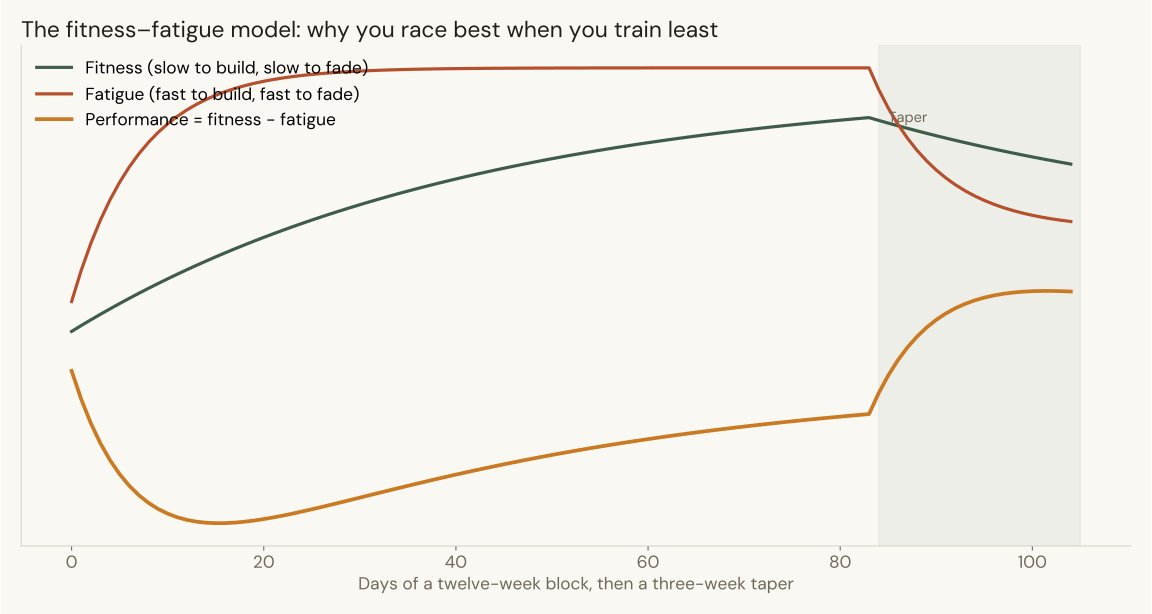
The Banister fitness-fatigue model explains it: performance equals fitness minus fatigue, and fatigue both accumulates and decays faster than fitness. Feeling slow inside a heavy block almost always means fatigue is masking fitness you have already built. The tell is a taper — if HRV climbs above baseline and pace returns as volume drops, it was fatigue.
You’ve been training harder than ever. Your weekly mileage is up. You’re nailing your long runs. But your times are going backwards, easy paces feel laboured, and you’re starting to wonder whether you’ve lost fitness.
You almost certainly haven’t. What you’re experiencing is one of the most misunderstood phenomena in endurance sport: fatigue masking fitness.
The fitness-fatigue model
In 1991, Banister et al. published what has become the foundational model of athletic training. The impulse-response model describes training as generating two simultaneous, opposing effects:
- Fitness (positive adaptation) — builds slowly over weeks and months. The cardiovascular, metabolic, and neuromuscular adaptations that make you a better runner. Decays slowly during rest.
- Fatigue (negative suppression) — accumulates quickly from training stress. Arrives immediately after a hard session. Decays faster than fitness during rest.
Performance at any point in time = Fitness minus Fatigue.
This simple equation explains why the best marathon runners often feel awful two weeks before their A-race and then produce a personal best on race day. The training block built enormous fitness. The taper cleared the fatigue. What emerges is peak performance.
“You’re probably fitter than you feel. Fatigue hides fitness. The model that coaches have used for 30 years proves it — Kovr runs it on your actual data.”
Why this matters for everyday runners
Most recreational runners don’t have a coach plotting their fitness-fatigue curves. They experience the phenomenon and draw the wrong conclusion from it. Hard training week → feels terrible → “I must be getting slower” → trains harder to compensate → fatigue deepens → performance declines further.
The correct response to feeling slow in a training block is almost always the opposite of training harder. It’s a strategic reduction in load to let fatigue dissipate while fitness remains elevated. Then — counter-intuitively — performance rises.
The taper effect in numbers
Studies on marathoners show that a 2–3 week taper (20–40% volume reduction, maintaining some intensity) produces average performance improvements of 2–3% compared to equivalent athletes who don’t taper. This is the fitness that was hidden by fatigue, now unmasked.
How to tell fatigue from fitness loss
The practical question: when you feel slow and flat, is it fatigue (temporary, responds to rest) or fitness loss (actual detraining, requires rebuilding)?
- Timing: Fatigue typically follows a hard session or heavy training week. Fitness loss requires 2+ weeks of significantly reduced training (below 50% of normal load).
- HRV response: Fatigue suppresses HRV, which rebounds with 1–3 easy days. Fitness loss doesn’t show up in HRV at all — HRV reflects recovery state, not fitness level.
- The easy run test: After 2–3 genuinely easy days, does easy pace feel controlled and comfortable? If yes, it was fatigue. If easy pace still feels laboured with suppressed HRV, you may be in overreaching territory.
Reading the HRV taper signal
One of the most useful HRV patterns for experienced runners: during a well-executed taper, HRV often climbs above its normal training baseline. This “supercompensation” in HRV reflects the nervous system fully recovering and then some — the parasympathetic system becoming dominant as accumulated training stress clears.
Reading a taper this way needs a baseline first — the HRV guide for runners covers how to build one. If the flat feeling keeps deepening instead of lifting, that is the point to check the overtraining signs and how many rest days a long run actually warrants.
The classic signs of a good taper: HRV climbing above baseline, legs feeling springy and restless, motivation unusually high, easy runs feeling almost effortless. This is the fitness that was hidden under weeks of fatigue, now fully visible.
Kovr tracks the fitness-fatigue balance in your actual training data.
The weekly coaching letter shows whether your current state is fatigue (reducible with rest) or something deeper. When you’re in a heavy training block, Kovr tells you which factor is dominant — and what one change this week would make the difference.
Download Kovr on the App StoreFree with a 14-day trial · Garmin, Apple Watch & Oura
The trap of training harder when you feel slow
The hardest part of the fitness-fatigue model is accepting that sometimes the correct training decision is to do less. Every elite running coach understands this. Recreational runners often fight it — because the intuition that feeling slow means training less runs directly against the “no pain, no gain” culture that surrounds the sport.
The data doesn’t lie. Fatigue decays faster than fitness. Strategic rest is not giving up. It’s letting the work you’ve already done actually show up.
Frequently asked questions
What is the difference between training fatigue and fitness?
Fitness builds slowly over weeks; fatigue accumulates quickly after hard sessions and decays faster during rest. Performance = fitness minus fatigue. High fatigue masks the fitness underneath, making you feel slower even as you get fitter.
How do I know if I’m overtrained or just tired?
Normal fatigue resolves with 1–2 easy days. Overtraining persists despite rest. HRV returning to baseline after easy days is the most reliable signal you were fatigued rather than overtrained.
Why do I often run my best after a taper?
The fitness-fatigue model explains this. Taper reduces volume, fatigue dissipates faster than fitness, and peak performance emerges 10–14 days after the heaviest training block.
What is the Banister fitness-fatigue model?
Published 1991. Training generates two effects simultaneously: fitness gain (builds slowly) and fatigue cost (arrives quickly). Performance = fitness - fatigue. Underlies modern periodisation and training load software.
How long does training fatigue last?
Acute fatigue from one hard session: 24–48 hours. Accumulated fatigue from a heavy block: 7–14 days of reduced load. This is why 2–3 week tapers before major races produce peak performance.